
Yes, for the right person. The pay is solid, the work is steady and you don’t need a degree to start. But it asks a lot in return, and being home every night isn’t part of the deal.
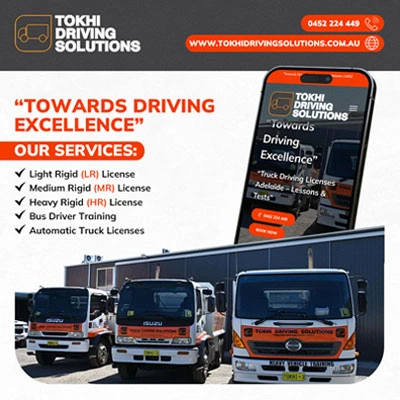
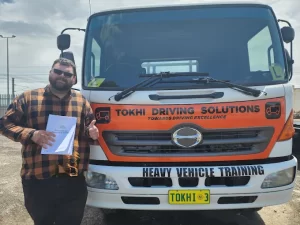
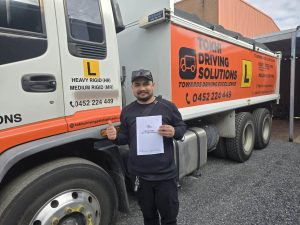
Ask a veteran trucker and you’ll usually get a pause before the answer. “Depends what you want out of it.” They’re right. We’re Tokhi Driving Solutions, a family-run driving school in Cavan, South Australia, and we train people across Adelaide who are asking exactly this. So here’s how we’d weigh it up.
What do truck drivers actually earn?
Jobs and Skills Australia has the median full-time wage at $1,960 a week as of May 2025, which works out to around $42 an hour. Across all occupations the weekly figure is $1,852. Over a year, that’s roughly $100,000 before tax.
Look closer, though, and the picture shifts a little. The all-occupations hourly rate is $47, so truckies are actually behind on an hourly basis. They get ahead on weekly pay because they work more, around 49 hours a week full-time against 44. Worth knowing before you start counting that six-figure number.
Where you land depends on your licence class, what you’re hauling and when. Night shifts, weekends and long distances usually pay better, and combination licences open up the better-paying jobs. New drivers tend to start under the median and climb.

Is there work out there?
Plenty. About 195,800 people drive trucks in Australia, and the median age is 45, compared with 39 for all workers. Safe Work Australia, quoting Jobs and Skills Australia, says there are shortages in every state and territory bar Victoria. When a workforce skews older, jobs keep coming up.
Do you need a degree? Not even close.
Only about 5% of truck drivers have a bachelor degree or higher. What you need is the right licence, and enough time on the one you already hold. In South Australia the heavy vehicle ladder goes LR, MR, HR, HC, MC. A rough guide:
- HR: you’re 19 or older, with a car licence held for two years (or an LR or MR held for one).
- HC, the semi-trailer licence: an MR or HR held for a year.
- MC, road trains and B-doubles: an HR or HC held for a year.
Don’t tick those boxes? SA has other pathways, so it’s worth asking before you give up on it. Rules shift now and then, so check with Service SA on 13 10 84, or ask us.
Where can it take you?
Plenty of drivers stay with the same company for years and work towards better routes and newer trucks. Others move into tankers, car carriers, heavy haulage or dangerous goods, which usually needs extra training, and the rules vary by state. Then there’s going out on your own as an owner-operator. More freedom, sure. Also your own clients, insurance, maintenance, paperwork and all the risk.
What’s the downside?
Being away. A run like Adelaide to Perth can mean days on the road, and weekends and public holidays are often part of the roster. Drivers also work to work and rest limits set by the National Heavy Vehicle Regulator, so you can’t just push on because you feel like it. That’s a good thing.
Then there’s the safety side, which people tend to skip. Over the ten years to 2023, Safe Work Australia recorded 22.6 deaths per 100,000 truck drivers. For all occupations it was 1.5. That’s a big reason to take your training seriously.
So, should you do it?
If you like your own company, want reliable pay and a job you can get into without years of study, and you’d rather be on the road than behind a desk, probably yes. If getting home every night is non-negotiable, probably not.
Before you decide, go and talk to a few working drivers. Ask about the weeks away, the quiet hours and what a normal week looks like. You’ll learn more from that than from any job ad.
If you’d like to know where you stand, get in touch with Tokhi Driving Solutions and we’ll go through the licence path with you.